


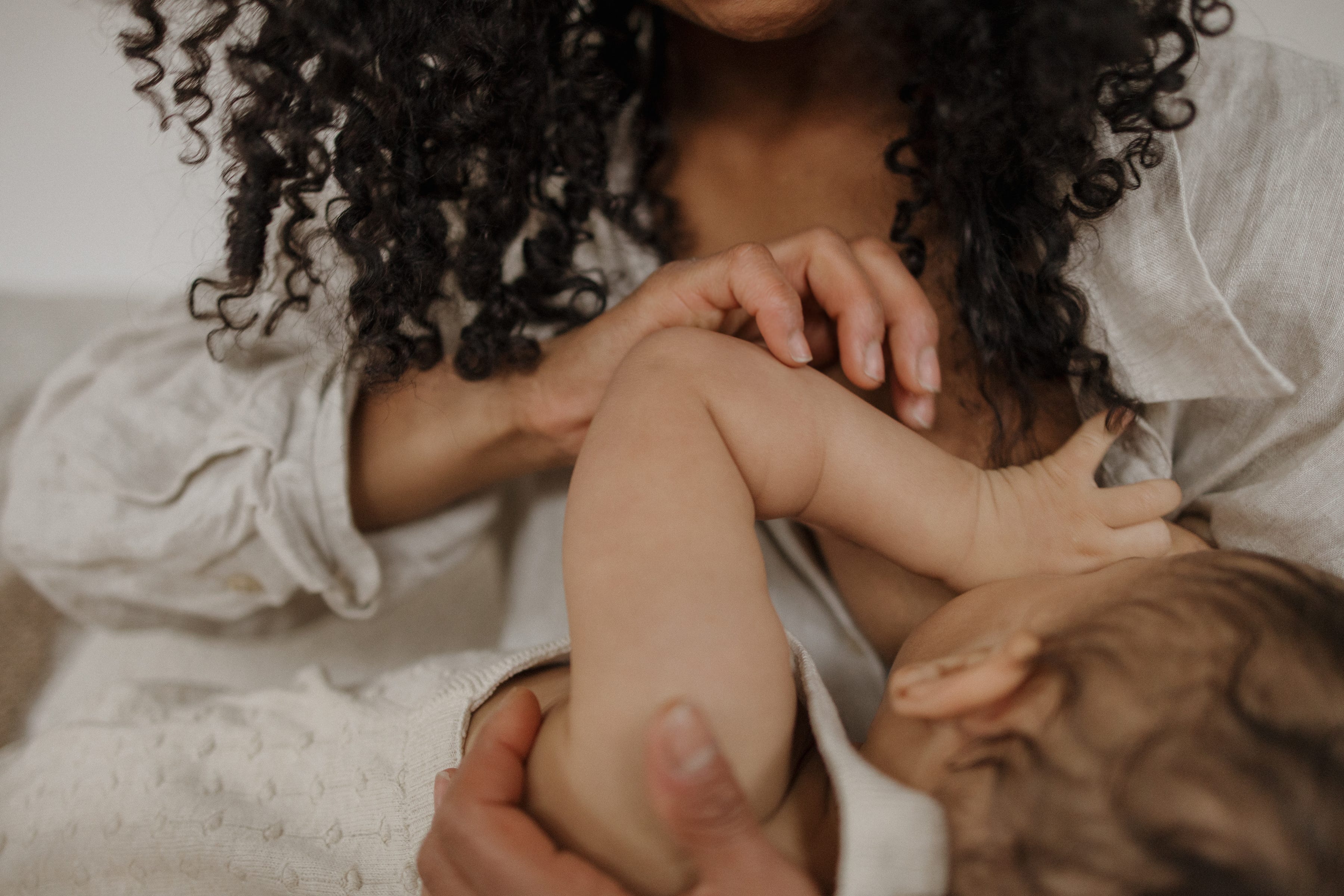
I struggled with low milk supply for the first week of my daughter’s life. She spent hours on my breasts, my nipples had become sore and were bleeding, and we still had to supplement with formula because she wasn’t getting enough.
Then, exactly a week after she was born, as I held her to my breast and she latched on, I suddenly felt a torrent of blood running down my legs. I rushed to the bathroom, where I nearly fainted. I was experiencing a postpartum hemorrhage caused by retained placenta, and I ended up in hospital for an emergency D&C.
I woke up from the surgery completely shattered and decided there and then that I was done with breastfeeding — it had been physically and mentally draining from the very start, I had just lost a lot of blood, and I needed to recover. I needed to regain my sanity regardless of how much I desired to breastfeed.
Ironically, what I didn’t know at the time - and no medical professional bothered to explain - was that retained placenta was in fact what was also suppressing my milk supply. So with the placenta now fully removed, my milk would have finally come in.
But I didn’t know this, and so I asked the midwives to give me the pill that stops your milk.
The pill is cabergoline. It works by mimicking dopamine, and dopamine is what switches off prolactin, which is what makes milk — so you take it, and within a couple of days your supply is gone.
Before I could take it, I had to pump one last time to empty my breasts.
I was utterly taken aback by what happened. I cried uncontrollably, for a long time, and I could not have told you why. I was in the bedroom all by myself and the tears just kept flowing.
I had made the decision myself and I was relieved to have made it, and at the same time I was devastated in a way that made no sense to me at all.
And what made it worse was the fact that no one around me could understand me and could explain what was happening.

Evolution
The most striking explanation I found which deeply resonated with me is in Hilary Jacobson’s book Healing Breastfeeding Grief, which I highly recommend. She writes:
“When a mother is unable to breastfeed, it is possible that her brain, which is imprinted with ancient and primal patterns, actually believes that she has lost her baby. The researchers explain that for thousands of years, if a ‘primitive’ woman did not nurse her baby, it was probably because her baby had not survived. They theorize that if we do not succeed at breastfeeding, a very old part of our brain might believe we are in mourning, and this is why we feel so devastated.”
Breastfeeding is how mammals keep their young alive, and for almost the whole of our history as a species a baby that could not be nursed was a baby that was unlikely to survive. The psychologist John Archer, in The Nature of Grief, argues that grief itself evolved as our response to a broken attachment. So grieving the end of breastfeeding is exactly what you would expect a mammal to do, which is more or less Jacobson’s point.
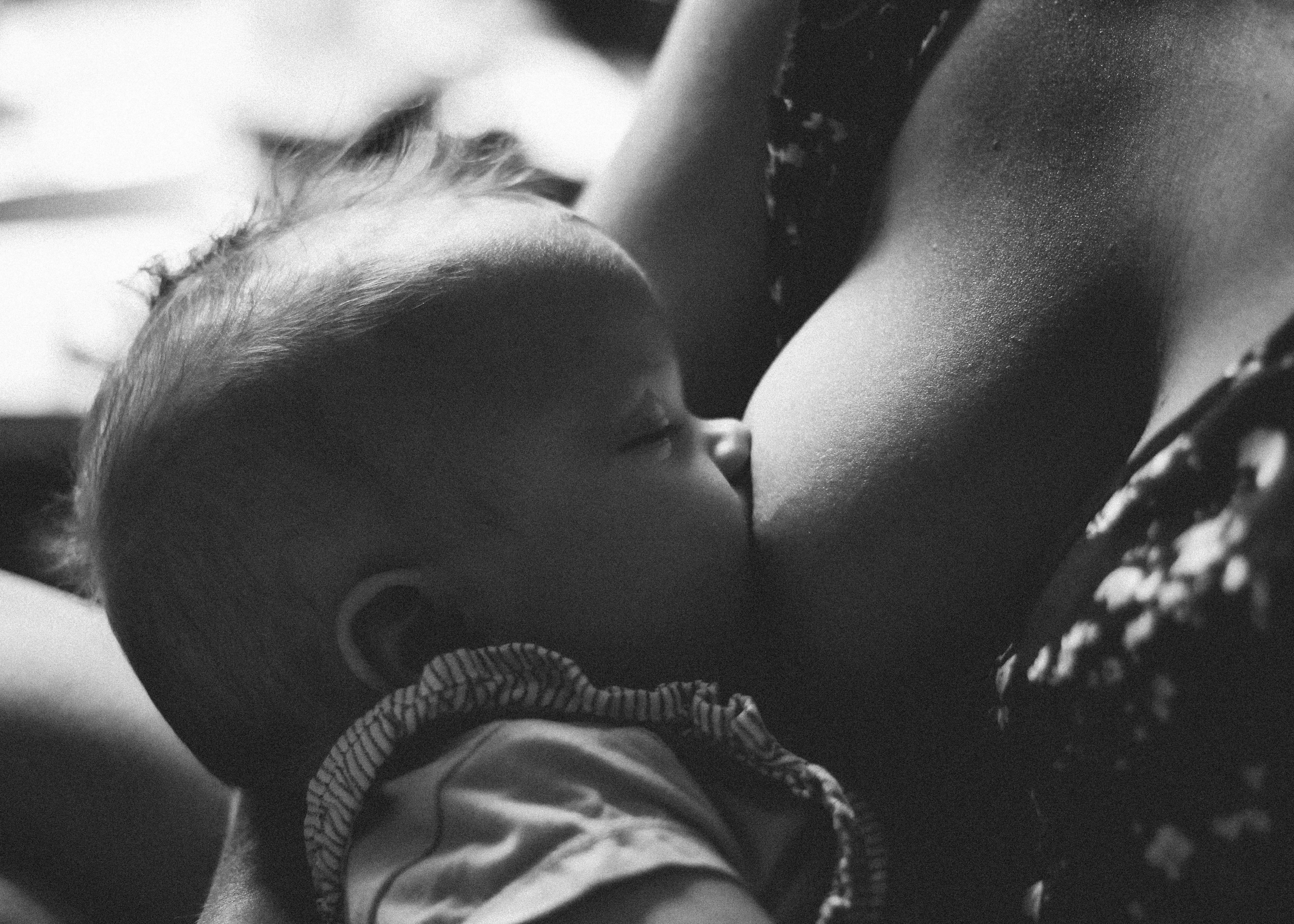
What happens when you stop?
Breastfeeding is not just something your breasts do. It is a whole hormonal state that your body might spend years in.
Every time you breastfeed, your body releases prolactin and oxytocin. Prolactin is responsible for milk production, but it also acts on the brain to promote a calmer, more relaxed state, while oxytocin triggers the letdown reflex and acts on the brain and nervous system, where it is involved in bonding, mood and the way your body responds to stress.
Once you stop breastfeeding, that beautifully orchestrated hormonal cascade comes to an end.
Unsurprisingly, your mood can then be affected as prolactin and oxytocin levels fall, the allopregnanolone-GABA system shifts again — the same system implicated in postpartum depression — and eventually your period returns, bringing with it another set of hormonal fluctuations.
Obviously, the more gradual the weaning process, the more time your body has to recalibrate to the hormonal shift. But oftentimes women stop breastfeeding abruptly and earlier than they wanted to, which can make an already difficult emotional transition even harder.
In a study of nearly 1,200 American mothers, about 60% of those who stopped breastfeeding stopped earlier than they had wanted to, and the most common reason was that they were struggling.
In the British ALSPAC cohort, the women at the highest risk of postpartum depression were the ones who had planned to breastfeed and couldn’t — a higher risk than women who had never intended to breastfeed at all. Amy Brown at Swansea, who has done more research on this than probably anyone, titled one of her papers “What do women lose if they are prevented from meeting their breastfeeding goals?”, and the women in her studies answer with grief, guilt and anger.
Another study, the Norwegian Mother and Child Cohort (which followed more than 42k women) found that women who had stopped breastfeeding by six months postpartum showed a greater increase in anxiety and depression symptoms. And the increase was greater in women who had already struggled emotionally during pregnancy.

Left in the dark
Given all of that, you would expect the end of breastfeeding to be something medicine keeps an eye on.
It is not.
The first published description of depression after weaning dates back to 1988, when two psychiatrists reported four women who developed depression within two weeks of stopping breastfeeding. They described it as “another postpartum complication” suggesting that they already suspected that the hormonal transition associated with weaning could trigger a depressive episode.
And then there was silence.
For decades, the phenomenon largely disappeared from the research literature.
It was not until a 2024 review in Archives of Women’s Mental Health that post-weaning depression was revisited as a distinct clinical phenomenon. The review described it as “a rare but severe complication of breastfeeding cessation” that is “understudied and often undiagnosed” and suggested that interest in it had waned partly because of the way perinatal psychiatric disorders came to be defined.
It has to do with the timeline.
The diagnostic framework doesn’t recognise post-weaning depression as a distinct condition. Its “with peripartum onset” specifier applies when a depressive episode begins during pregnancy or within four weeks of giving birth. But most women who breastfeed continue for months or years, meaning that weaning typically happens long after that window has closed. So when depression emerges around weaning, it falls outside the period that the DSM formally identifies as peripartum. There is no specific diagnostic category for post-weaning depression, no routine screening for it, and remarkably little research on it — despite the fact that the phenomenon was first described almost forty years ago.
Once you have given birth, your medical care effectively ends at six weeks. There is no appointment that follows up with you when you stop breastfeeding — even though your body is going through another major hormonal transition.
We talk about the hormonal upheaval of pregnancy. We talk about the crash after birth. We talk about puberty and we talk about perimenopause. But we rarely talk about the hormonal transition out of lactation, and modern medicine does not monitor it, does not screen for it, and in nearly forty years has not managed to study it beyond a handful of case reports.
Breastfeeding is a physiological state, and ending it is a transition out of that state — one that every breastfeeding woman goes through, whether at one week or at two years, whether she planned for it or not.
It is yet another major transition that we, as mothers, are left to navigate largely on our own.


Oof. Thank you for this. I'm weaning now, and although I'm actually so relieved to be done (it's been such a hard journey for me), I can't help but also be a little sad.
I still have grief over my breastfeeding journeys from time to time. There’s so much emotion tied up in it that no one prepares you for.