


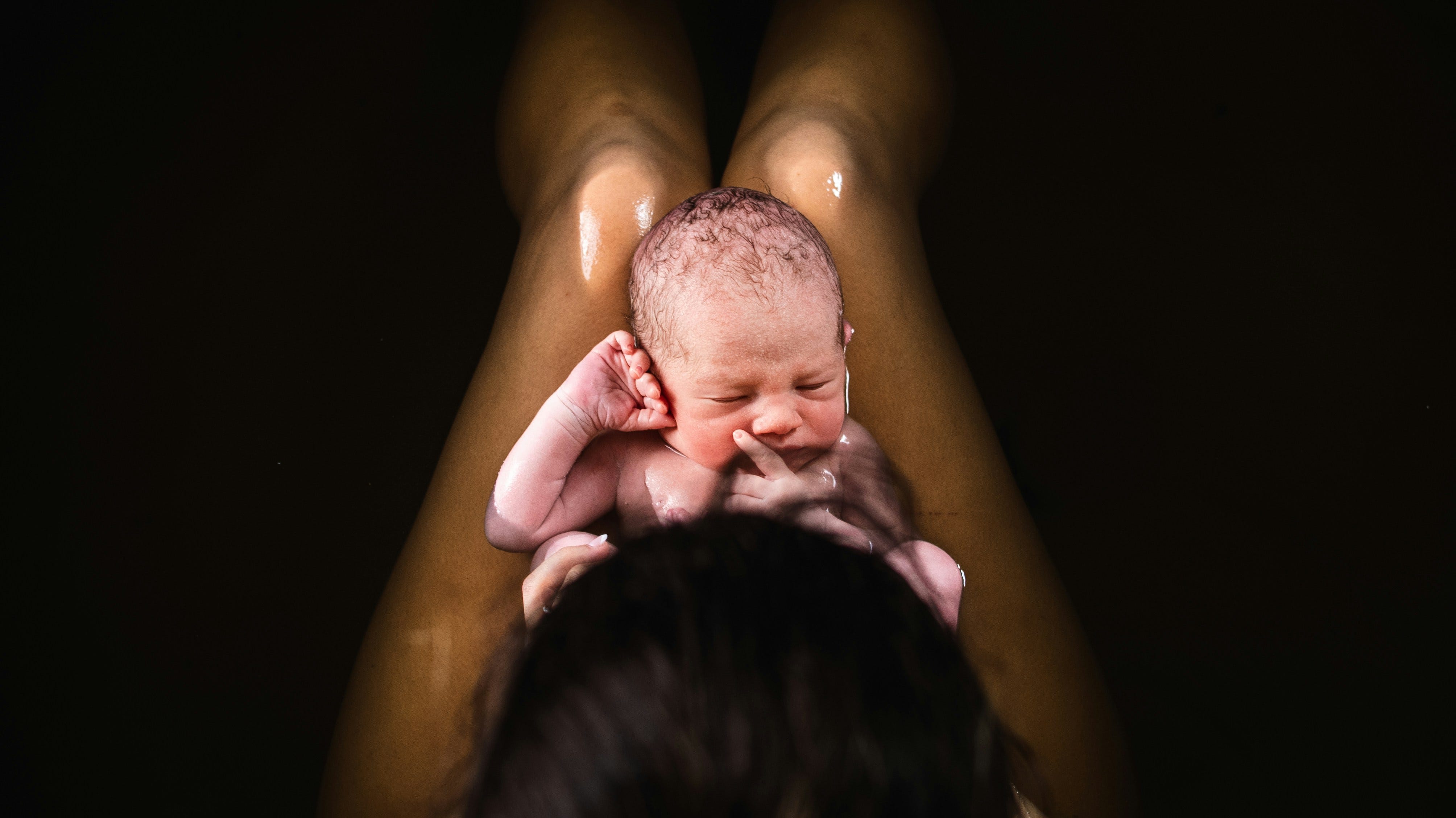

When I was pregnant, I briefly went looking for a photographer for a maternity shoot. I found one whose work I really liked, and somewhere between the photographs of beautiful pregnant women standing in fields and the usual newborn sessions, I noticed that she also offered birth photography.
The idea was immediately off-putting. I could imagine wanting photographs of my pregnant body; I was carrying my first child and knew I would probably want to remember what I looked like - and one day show those pictures to my daughter. But having somebody with a professional camera in the room during the most intense experience of my life, when I would be at my most vulnerable, felt like an intrusion.
In the end, I didn’t even make it to the maternity shoot. By the third trimester I was so swollen and exhausted that getting dressed up and posing for an hour on some remote rocky beach or in the dry Cypriot garrigue, trying to catch an August sunset, was the last thing I wanted to do.
At the birth itself, one enthusiastic midwife did manage to snap a photo of me holding the baby, just after I had delivered the placenta. I really didn’t want one (and I never asked for it to be sent to me in the end).
But it seems I was rather old-fashioned. Birth has long been a genre of its own online, with influencers doing full get-ready-with-me routines while in labor.
If your livelihood depends on people watching your life, pregnancy supplies you with plenty of content: the announcement, the scans, the gender reveal, the bump updates, the nursery, the baby shower, the hospital bag and, finally, the birth itself.
Of course, there is nothing wrong with wanting to document these milestones. But once you see them all over social media, it starts to feel like a competition over who can put on the best performance.
Lights, Camera, Action!
Media researchers Rivka Ribak and Anat Leshnick interviewed nine women whose hospital births had been photographed between 2016 and 2020: several described changing how they prepared for birth, and even how they behaved in labor, because they knew they were going to be photographed.
One worried about what to wear. Another delayed going to the hospital so she could blow-dry her hair first. A third had disliked the expressions she made in the photographs of her first delivery, so when she gave birth again, she remembered those pictures while she was pushing and tried not to make the same “ugly faces.”
Influencers take this much further. Heidi Montag, who became famous on the MTV reality show The Hills, was waiting in the hospital to give birth to her second son in 2022 when she posted a TikTok of a makeup artist applying her foundation as she sat in bed eating. Her husband and former co-star, Spencer Pratt, was beside her with a phone set up on a tripod, and according to other reports, a photographer and lighting equipment were in the room as well.
Montag later described an earlier false alarm as useful, because they had already done her hair and makeup and “got all the content”! Ribak and Leshnick have a term for this mixture of genuine experience and commercial production: commercial authenticity.
Lae Harris, a TikTok creator, went viral with a video called I Did My Makeup Before Birthing My Baby, in which she applied a full face of makeup, false eyelashes included, while in labor. She had been disappointed by the photographs from her son’s birth because they weren’t as beautiful as she had imagined, and for her second child she wanted to look better in the pictures.
Like the woman in Ribak and Leshnick’s study, she was measuring herself against photographs of her own previous birth.
The presence of a camera doesn’t prove that any of these women experienced their births less deeply; it does show that knowing you will be photographed can change what you do before and during labor. With influencers, the future audience runs to millions, and it is part of the reason the camera is in the room at all.
The perfect birth
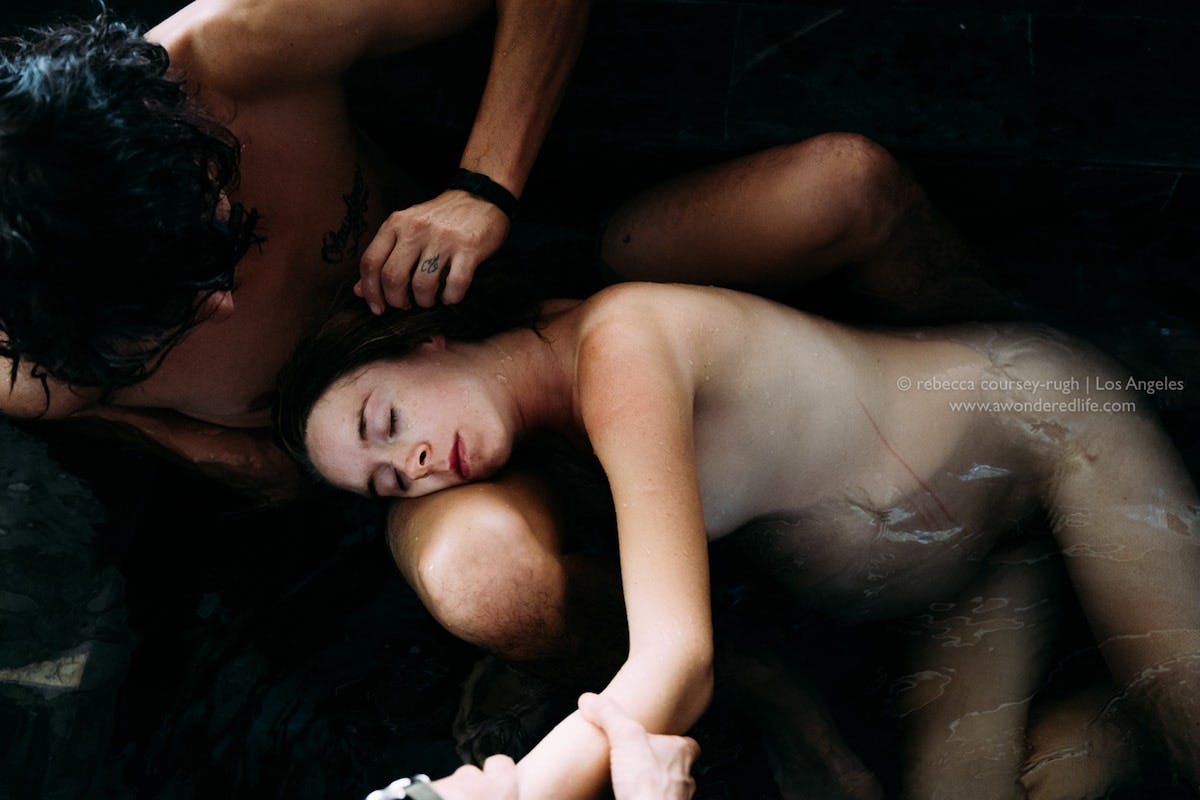
While I can dismiss, to an extent, the vanity of influencers doing their makeup in labor and oversharing their private lives for clicks, another type of birth content gets much further under my skin: natural birth as an aesthetic mood board.
My Instagram feed throughout my pregnancy was full of seemingly serene, even romantic births. The room was dark and lit by candles or fairy lights, the woman laboring in a pool with her partner’s arms wrapped around her. There were naked backs and wet hair, and newborns rising out of the water onto bare chests.
Even the photographs taken at the point of greatest exertion somehow looked beautiful.
A 2023 study called The perfect birth analyzed 917 birth-related posts from 20 popular Instagram midwives from the UK, the United States, Australia and New Zealand. Compared with national birth statistics, the posts showed far more vaginal births, water births and home births - a low-risk, unmedicalized version of childbirth.
It isn’t hard to see why. A hospital birth under fluorescent lights is far less photogenic, and an unplanned cesarean or a medical emergency leaves little room for a cameraman.
If you are pregnant, social media is probably one of the places you go to figure out what birth might be like. When the same aesthetic shows up again and again, wrapped in the language of “empowered” and “positive” birth, it starts to shape what you think birth should look like.
It certainly shaped what I wanted. I was set on an unmedicated birth, and I was afraid of being induced because of the “cascade of interventions” - the idea that one intervention leads to the next until you end up with a C-section. The idea of a water birth was tempting too, but the only person I pictured delivering my baby was my OB-GYN, a maternal-fetal medicine specialist (who was, at the time, pregnant with her fifth child herself).
As a certified nutritional therapy practitioner, I am fascinated by holistic health and modern medicine in equal measure. I believe the two can - and should - coexist, especially now that chronic illness has reached epidemic levels, because food, exercise and lifestyle do have an effect on health.
But I hate any dogma that radicalizes people and forces them to pick a side: you’re either “crunchy” or you’re not. The cascade I had been so afraid of is a textbook case - it sounds plausible, but the evidence points the other way - a trial published in 2018 (ARRIVE) revealed that induction actually slightly lowered the odds of a C-section.
Freebirth sits at the far end of the “natural” dogma: giving birth with no midwife or doctor present. A 2025 study of women who chose it found that Facebook groups and YouTube videos strengthened their confidence in that decision, and several had watched freebirth videos involving circumstances the researchers described as “obstetrically risky.”
The Free Birth Society has been one of the biggest voices in that world, with a podcast downloaded more than 5 million times. It is run by Emilee Saldaya, a former doula with no medical training, and it teaches women that serious birth complications are “variations of normal.” Medical experts say its claims about life-threatening emergencies such as hemorrhage are false and dangerous.
In 2025, The Guardian ran a year-long investigation and found 48 late-term stillbirths, newborn deaths and other cases of serious harm that appear to be linked to the Free Birth Society.
But the reality is, a birth can be perfectly “natural” and still need medical help. In the Birthplace in England study, a whopping 45% of low-risk, first-time mothers who planned a home birth were transferred to a hospital during labor or soon after.
A birth plan has to adapt when the clinical situation changes. If you have idealized the beautiful, low-intervention birth, the medical care you need can start to feel like something to resist, when it is the reason you and your baby come through safely.

A room with the right audience
I don’t regret never asking for that photo of me with the baby, placenta and all, even though it might have made a truly unique post (imagine the likes!).
To me, birth is monumental - one of those moments that should be allowed to exist without becoming content.
It is also physically overwhelming and sometimes completely unpredictable. You may spend months planning a water birth only to end up in the operating room. You may want an unmedicated birth, as I did, only to find the pain too much to bear and ask for an epidural. (I did get my unmedicated birth, but I came very close to asking for a C-section - I just needed to be delivered of the pain.)
You may picture candlelight but a medical emergency might mean fluorescent lights instead. Yet in those moments, you have to trust the doctors and midwives in the room more than influencers online.
Every birth is different, and part of preparing for yours is accepting that almost anything can happen. There is no correct lighting, setting, position, facial expression or degree of medical intervention. But when your feed and your online communities brainwash you into believing that birth should look a certain way - or that you should - the consequences can be genuinely harmful.
Birth is not like your morning routine. It cannot be styled or optimized.
Yet social media has wrapped it in so much misinformation and so many false expectations that you can walk away from the most extraordinary experience of your life feeling like you failed at it.


100% agree. I'm an NTP, too! I got certified in 2018 and have always been into a balance of holistic and conventional approaches because I think they can compliment each other, vs. being at odds with one another.
Well said 👏🏾👏🏾 It is unfortunately another invitation for us to compare ourselves as women and draw our sense of worth based on whether we “met expectations”