



From Ancient Goddesses to the Virgin Mother
Pregnancy has been depicted in ancient art for millennia.
In Greece, archaeologists have found clay figurines of pregnant women from Neolithic Thessaly, dating back nearly 8,000 years. In Cyprus, where I live, excavations at Kissonerga-Mosphilia, near Paphos, uncovered a striking clay figurine from around 3000 BCE of a woman seated on what archaeologists believe was a birthing stool.
Cyprus is also rich in ancient Phoenician-influenced art. Among the artefacts found here and across the Eastern Mediterranean are the Dea Gravida figurines - literally from Latin, ‘pregnant goddess’ — some of which now sit in the Louvre and the British Museum. These terracotta figurines clearly represent pregnant women, wearing veils or elaborate headdresses, with a hand resting on their protruding bellies, and examples from Cyprus date to around 600–475 BCE.
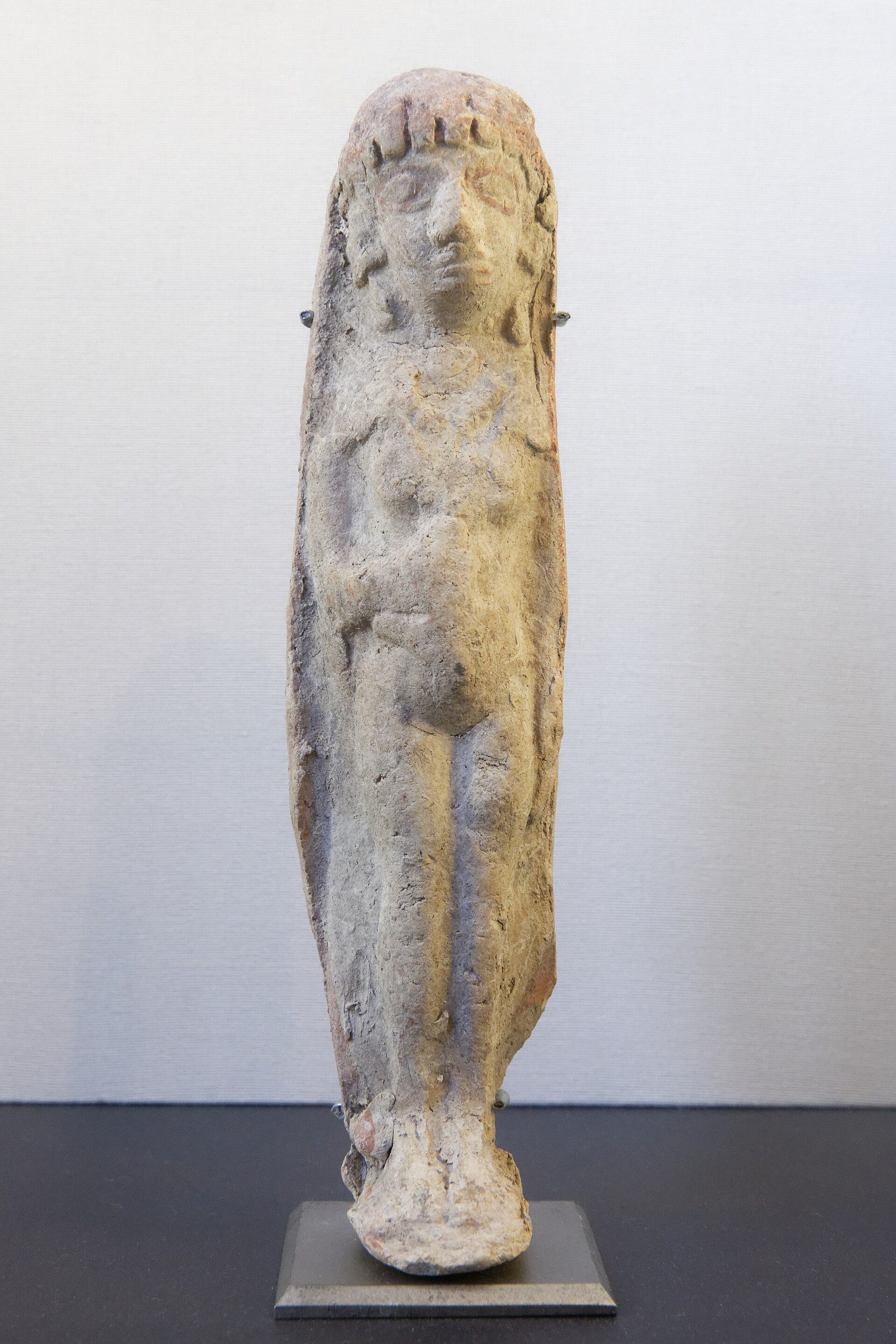
In the ancient world, pregnancy and childbirth occupied an important place in the religious and cultural imagination. And it wasn’t simply because people revered the female form and fertility. They also sought divine protection for mothers, whose lives could hang in the balance during pregnancy and childbirth.
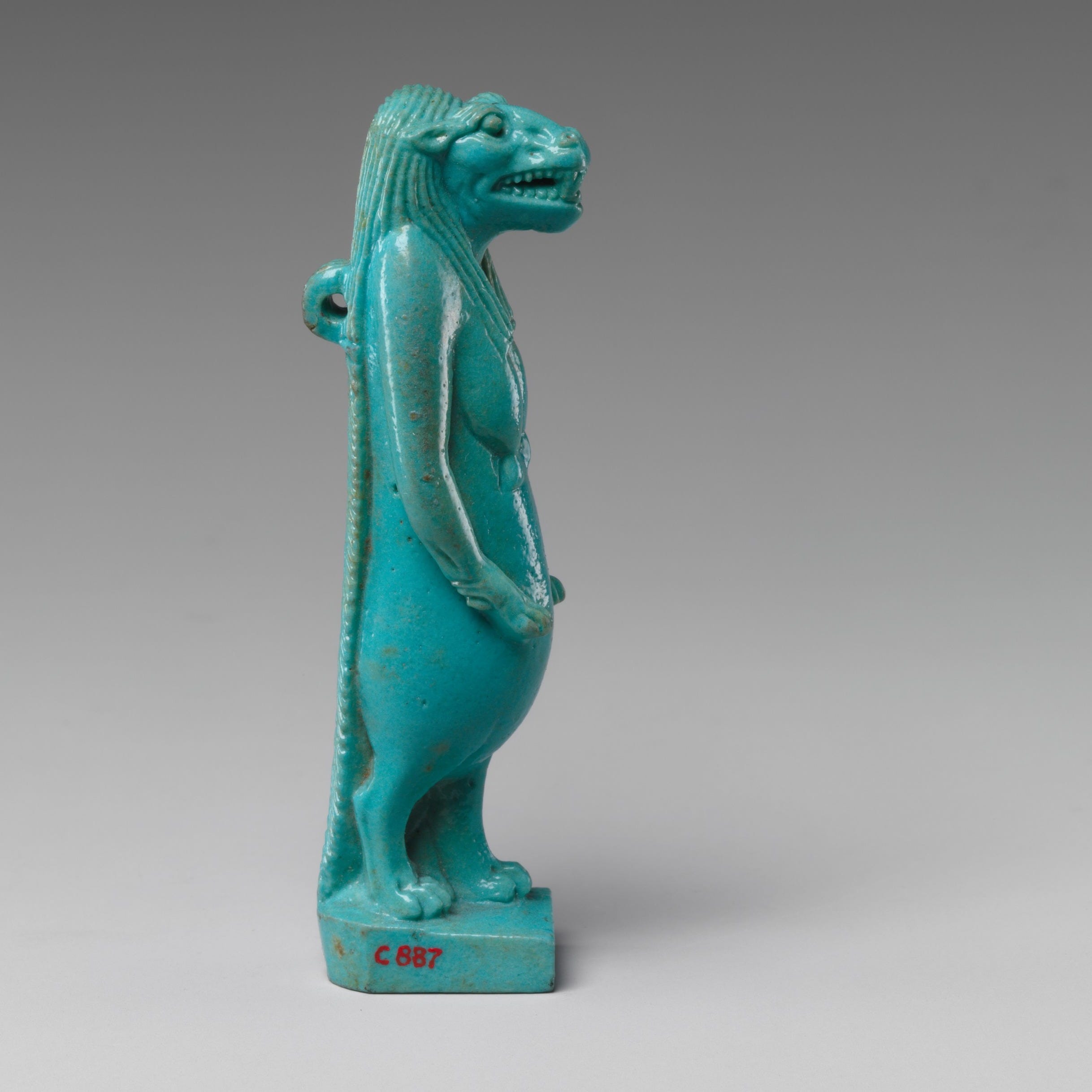
In ancient Egypt, the goddess Taweret was depicted as a pregnant hippopotamus, with human breasts, lion’s paws and a crocodile’s tail. She was certainly not an idealised image of feminine beauty. Her enormous belly and fearsome appearance symbolised her power to protect pregnant women and their babies from the dangers of childbirth. Women wore amulets depicting her, hoping to secure her divine protection.
The ancient Greeks had their own goddess of childbirth, Eileithyia, whom women invoked for protection and relief from labour pains. At a sanctuary dedicated to her in Crete, archaeologists discovered clay figurines of pregnant women, mothers holding infants and even women actively giving birth. One beautiful example, dating to around 850–750 BCE, shows a woman in labour being embraced by a figure thought to represent the goddess, whose hands rest on the woman's swollen belly.
Then early Christianity began to reshape ideas about sexual morality and, over time, the way pregnancy was portrayed in European religious art. Its thinkers inherited Jewish teachings about sexual conduct, alongside Greek and Roman philosophical traditions that valued self-control and restraint.
Over the first five centuries, some Christian communities increasingly held up celibacy and virginity as spiritual ideals — the epitome being the Virgin Mary, who conceived a child without engaging in the carnal act of intercourse.
In the late fourth century, Ambrose of Milan (one of the most influential theologians of early Christianity) described Mary’s womb as a pudoris aula regia — ‘a royal hall of chastity’ — like a royal chamber reserved for the king alone. He also defended the belief that her virginity remained intact even in childbirth.
The ideal woman was both a mother and a virgin.
In his book The Body and Society: Men, Women, and Sexual Renunciation in Early Christianity, the historian Peter Brown explores how bodily restraint — such as fasting and celicbacy — came to signify resistance to the temptations of the flesh and a higher spiritual life.
This meant that for women, whose identity was bound up with childbearing, choosing celibacy offered another spiritual path and an alternative role in society. For some women, rejecting marriage was a radical route towards greater agency. Yet the institution that offered that freedom also developed new ways of regulating their bodies.
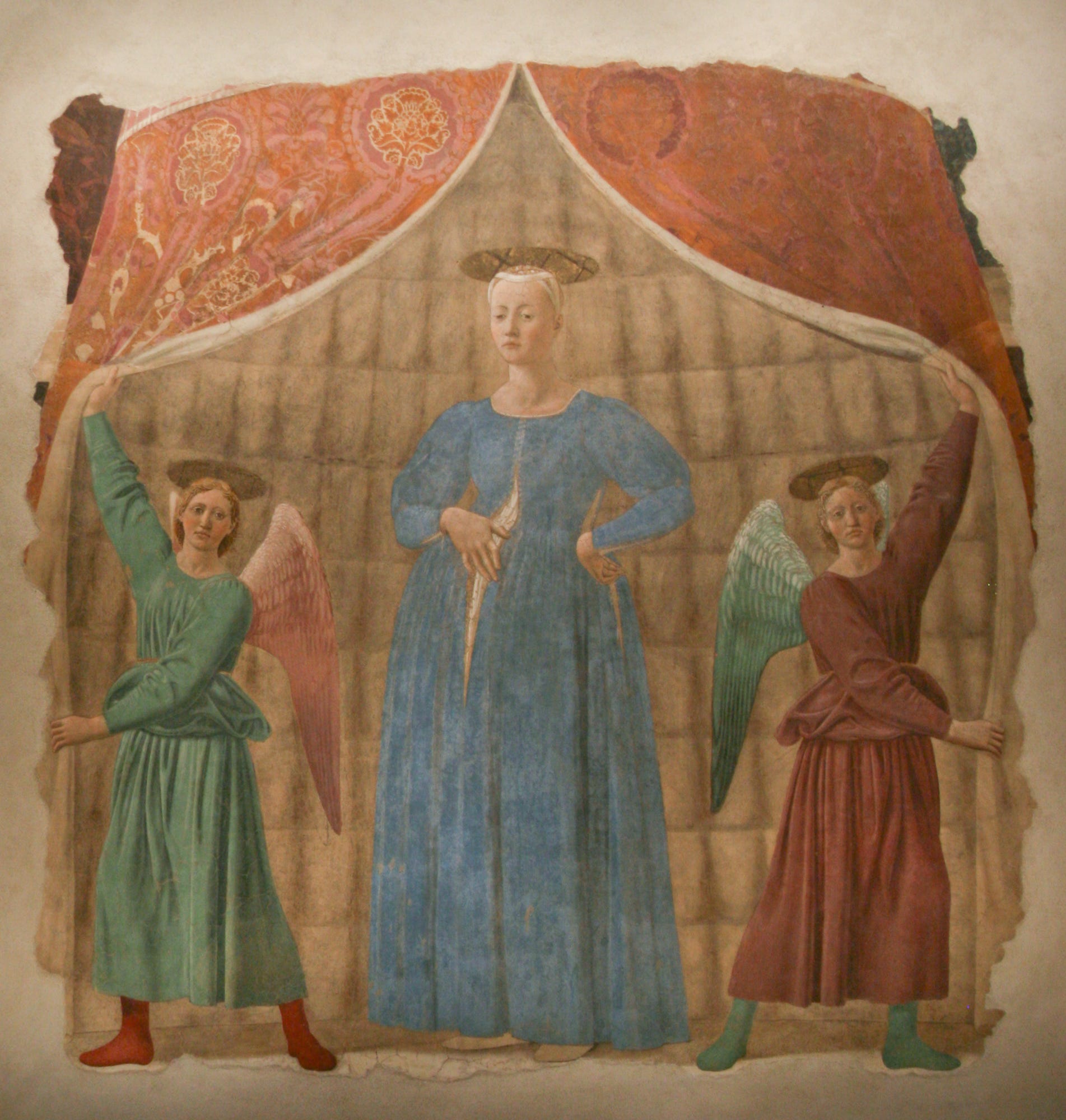
While Italian Renaissance painters gave us pregnant Madonnas (Piero della Francesca’s Madonna del Parto, from around 1460, is the most famous), religious imagery came under increasing scrutiny during the Counter-Reformation. In 1563, the Council of Trent instructed bishops to forbid images ‘adorned with a beauty exciting to lust’.
The Angel in the House
So it isn’t hard to see why restraint and modesty became qualities that sections of European elite society aspired to. In the centuries that followed, pregnancy presented a curious contradiction: motherhood was celebrated, yet the visibly pregnant body drew attention to the very act that made motherhood possible, an act considered too indecorous to acknowledge openly.
Yet a married woman was expected to bear children, often far more than we do today — which meant that for years of her adult life, her body showed exactly what conventions of respectability encouraged her to keep private.
In Victorian England especially, the ideal woman was modest, pure, devoted to her husband and children, and responsible for the moral character of her home. She was expected to be neither sexually assertive nor openly interested in sex for pleasure; rather, she was supposed to accept it as part of her duty to procreate.
In 1854, the poet Coventry Patmore published The Angel in the House, which became an influential portrait of this ideal, and whose title outgrew the poem itself. In nineteenth-century America, a similar ideal prevailed among the middle classes — what historians call the Cult of True Womanhood, or the Cult of Domesticity.
Motherhood could be publicly celebrated and glorified, while the sexual desire, labour, blood, pain and physical transformation involved in becoming a mother were often matters to be discussed only discreetly, between women.
‘Pregnant’ was considered a rather explicit word too, and the reluctance to say it in polite conversation, let alone to display a pregnancy openly, persisted well into the twentieth century. In its place, people used euphemisms such as ‘expecting’, ‘enceinte‘, ‘in the family way’, or ‘in a delicate condition’.
In 1952, the actress Lucille Ball became pregnant. At the time, she was starring with her husband, Desi Arnaz, in I Love Lucy, one of the most popular shows on American television, and their producer suggested incorporating the pregnancy into the storyline.
Initially, the executives at CBS and the sponsor, Philip Morris, objected outright. Eventually they relented, but Lucy was still referred to as ‘expecting’ rather than ‘pregnant’, and the episode that announced the pregnancy was called ‘Lucy Is Enceinte’.
Thirty-nine years later, in 1991, Annie Leibovitz photographed Demi Moore, then seven months pregnant, in the nude. The photograph was originally intended as Moore’s own keepsake, but Leibovitz thought it would make an extraordinary magazine cover. So she pitched it to Vanity Fair, and they ran it.
However, some newsstands and supermarkets still found the cover offensive and refused to stock it, while other newsstands displayed copies in white paper wrappers, the kind normally reserved for adult magazines.
Since then, pregnancy photography has become a genre in its own right.

The Pregnant Body Is Celebrated Again
In 2017, Beyoncé announced her pregnancy with twins in an Instagram photograph of herself kneeling amid an elaborate arrangement of flowers, wearing lingerie and a pale green veil, with her hands resting on her belly.
The photograph drew heavily on religious and classical imagery, and it gathered more than 11 million likes. It bears an uncanny resemblance to the ancient Dea Gravida figurines — with their veils and hands resting on their pregnant bellies.
And there is something fascinating about how, thousands of years later, the pregnant body has once again become an object of veneration, rather than an object of shame.
Modesty has given way to unapologetic, much-celebrated displays of the pregnant bump.
I do believe that pregnancy is an extraordinary event in the life of any woman and must be shown the reverence it deserves.
But I wonder how much of today’s unabashed display truly empowers women, or whether we have simply found another opportunity to turn it into an aesthetic.
And our celebration of the pregnant body seems to end the moment pregnancy does. We have become comfortable displaying and admiring the pregnant bump, yet the moment the baby is born, we expect women to erase all evidence of it. The very body we praised throughout pregnancy suddenly becomes something to hide, because its stretched skin, scars and ‘mummy pouch’ no longer fit our ideals of beauty. We still make women feel embarrassed about their postpartum bodies, while lauding a model’s return to the Victoria’s Secret catwalk just six weeks after giving birth as an extraordinary achievement, largely because she appears to have ‘bounced back’ so quickly.
The difficulties of pregnancy and postpartum, the physical and emotional toll of childbirth, and the invisible labour that mothers carry long after they have ceased to carry a bump are still too often discussed only discreetly, between women.


I love the way you include so much history and culture. The journey of our view is fascinating. I hope our daughter's time will include a healthier view of the post partum body.